

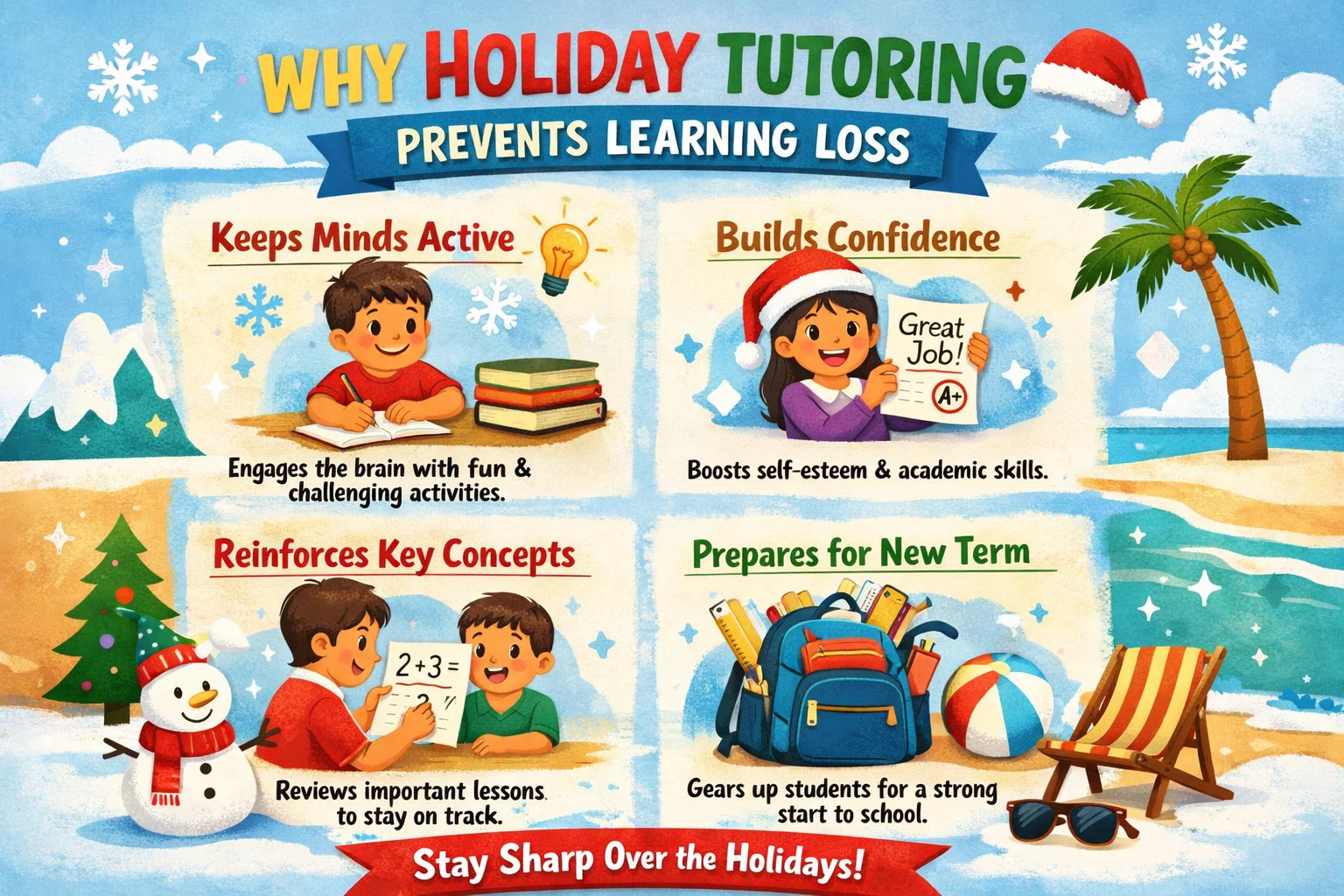
School holidays are meant to offer a pause, and children need that pause. They need time to rest, play, switch pace, and step away from the pressure of the regular term. But a break from school does not have to mean a complete break from learning.
That is where school holiday tutoring programs can make a real difference. Used well, they do not turn holidays into another school term. They simply help children hold on to what they have already learned, stay mentally active, and return to class without needing to rebuild lost ground. For families considering school holiday tutoring programs, the real value often lies in prevention rather than catch-up.
Learning Loss Often Begins Quietly
Parents do not always notice learning loss immediately. A child may seem fine during the holidays, then return to school and struggle to recall concepts that once felt familiar. Reading may feel less fluent. Maths steps may take longer. Writing may seem slower or less organised than it did a few weeks earlier.
This happens because learning is not only about understanding something once. It is also about using it often enough for it to stay secure.
When children step away from academic routines for too long, some skills begin to loosen. That does not mean they have forgotten everything. It means they may need time to reactivate what was already there. Holiday tutoring helps reduce that slide by keeping key skills in use.
Prevention Is Easier Than Recovery
One of the strongest arguments for holiday tutoring is simple: it is easier to maintain progress than to rebuild it later.
When a child returns to school having stayed engaged with reading, writing, or maths in small but regular ways, they often settle back into term more smoothly. They do not need as much revision. They are less likely to feel rusty. Teachers do not need to spend as much time bringing them back to where they were.
This matters because school terms already move quickly. If a child begins the term by recovering lost ground, the next layer of learning can feel harder than it should.
Small Gaps Can Widen Fast
A concept that felt manageable in one term can become harder if the foundation beneath it weakens during the break. What begins as a small pause in recall can affect confidence too.
Steady Contact Keeps Skills Alive
Holiday tutoring does not need to be intense to be useful. Regular contact with core concepts is often enough to keep them active.
Core Academic Skills Need Continuity
Not every subject is affected in the same way by long breaks. Core academic skills, especially reading, writing, and maths, often need the most continuity because they depend on practice.
Reading Needs Ongoing Use
Children read better when they keep reading. Fluency, comprehension, and vocabulary are all shaped by regular exposure. A child who reads consistently through the holidays is more likely to return with confidence and momentum.
Writing Slips Faster Than Parents Expect
Writing is one of the first areas where rustiness shows. Children may become slower at organising ideas, structuring sentences, or writing with ease if they go too long without using those skills.
Maths Often Needs Reinforcement
Maths can be especially vulnerable to learning loss because many concepts build directly on one another. If earlier steps become shaky, newer material can feel harder very quickly.
School holiday tutoring helps maintain these essentials before they start to slip.
Holiday Tutoring Supports Memory And Retention
Children do not keep academic skills secure simply by being exposed to them once. They need opportunities to revisit, use, and apply what they have learned.
This is where tutoring during the break can help. It brings back familiar ideas before they fade too far into the background.
A child who practises reading comprehension, revisits multiplication, or works through writing tasks during the holidays is doing more than filling time. They are strengthening memory pathways that make later recall easier.
That matters because retention is one of the quiet foundations of academic confidence. Children usually feel more capable when familiar work still feels familiar.
It Helps Children Return To School With More Confidence
The start of a new term can feel heavy for some children. Even those who are generally doing well may feel unsettled when routines return and academic expectations resume quickly.
Holiday tutoring can ease that transition.
A child who has stayed lightly engaged with learning is often more ready to re-enter the school rhythm. They are less likely to feel that sudden jump from complete break to full academic demand. That smoother return matters for confidence.
Confidence Often Depends On Preparedness
Children tend to feel more positive about school when they sense they can handle what is coming. Preparedness lowers resistance.
Early Success Sets The Tone
When children begin the term feeling capable rather than behind, the emotional tone of the first few weeks often improves too.
It Turns Holiday Learning Into Maintenance, Not Pressure
Some parents hesitate because they worry tutoring during holidays will make the break feel too academic. That concern is fair. Holidays should still feel like holidays. But good holiday tutoring does not need to take over the child’s time or drain their energy.
The strongest programs usually focus on light structure, targeted support, and manageable sessions. The idea is not to recreate school. It is to keep learning in motion at a pace that feels sustainable.
This is an important distinction.
A child does not need full school hours to benefit. In many cases, a few focused sessions during the break are enough to protect continuity without making the holiday feel over-managed.
Holiday Tutoring Can Address Weak Areas Before The Next Term
Another reason holiday tutoring helps prevent learning loss is that it creates space to revisit weaker areas without the pressure of daily school demands.
During term time, children are often trying to keep up with current classwork while also managing homework and other activities. The holidays can provide a calmer moment to strengthen what still feels fragile.
That might include:
- Reading comprehension that needs more support
- Writing structure that is still inconsistent
- Basic maths facts that are not yet automatic
- Grammar or spelling patterns that keep slipping
- Study habits that need more routine
Working on these areas during the holidays can make the next term easier, not heavier.
It Helps Children Stay In The Habit Of Learning
Learning is not only about content. It is also about habit.
Children who go several weeks without any learning rhythm may find it harder to settle back into focused work when school resumes. The challenge is not always that they have forgotten everything. Sometimes they have simply dropped out of the habit of concentrating, responding, and working through tasks.
Holiday tutoring can help preserve that habit gently.
Routine Makes Re-Entry Easier
Even one or two regular sessions a week can remind children that learning still has a place in their week.
Habit Protects Momentum
A child who keeps some link to academic routine often finds it easier to restart full-term expectations.
It Is Especially Helpful For Children Who Need More Repetition
Some children hold onto concepts quickly. Others need more exposure before learning becomes secure. That is not a weakness. It is simply a difference in how learning settles.
For children who need repetition, long academic breaks can be more disruptive. Skills that were only just becoming familiar may fade faster without use. Holiday tutoring helps protect those gains.
This is especially useful for children who:
- Need more guided practice
- Build confidence slowly
- Become anxious when they feel behind
- Learn best through steady reinforcement
- Are moving through foundational skill development
For these children, holiday tutoring is often less about enrichment and more about stability.
Good Holiday Tutoring Should Feel Focused, Not Overloaded
The quality of the program matters. Not every holiday learning setup prevents learning loss equally well. A strong program usually keeps the goal clear: reinforce, retain, and prepare.
That means sessions should feel:
- Targeted rather than broad and scattered
- Encouraging rather than heavy
- Structured without becoming rigid
- Appropriate to the child’s age and stage
- Focused on key areas that matter most
If a program tries to do too much, it can create resistance. If it is too loose, the academic benefit may be limited. The best holiday tutoring usually finds a middle path.
Parents Should Think In Terms Of Continuity, Not Catch-Up Alone
Holiday tutoring is often described as something for children who are behind. That view is too narrow.
In many cases, it serves children who are already doing reasonably well but would benefit from staying connected to learning through the break. It helps preserve progress, protect confidence, and reduce the need for recovery when school resumes.
This is why it should be seen less as a rescue measure and more as a continuity tool.
A child does not need to be struggling badly to benefit from structured support during the holidays. Sometimes the greatest value lies in ensuring that steady progress remains steady.
What Parents Should Look For In A Holiday Tutoring Program
If the goal is preventing learning loss, the program should support retention rather than overload.
Parents should look for:
- Clear focus on core academic skills
- Age-appropriate pacing
- Manageable session length
- Consistency across the break
- Teaching that reinforces rather than overwhelms
- Enough structure to keep skills active without making the holiday feel like school again
The strongest program is often not the one that promises the most. It is the one that fits the child well enough to keep learning alive through the break.
Final Thoughts
Learning loss during school holidays is rarely dramatic at first. It appears quietly, through slower recall, weaker confidence, and the need to rebuild skills that once felt more secure. That is why prevention matters.
Well-designed school holiday tutoring programs help children maintain continuity in the areas that matter most. They keep reading, writing, and maths active enough to reduce slippage, support retention, and make the return to school more confident and less stressful. In that sense, holiday tutoring is not about taking the break away from children. It is about making sure the break does not take too much away from their learning.
FAQs
Do School Holiday Tutoring Programs Make Holidays Feel Too Academic?
Not when they are designed well. Good holiday tutoring usually uses shorter, focused sessions that support learning without turning the break into a full school routine.
Which Skills Are Most Likely To Slip During School Holidays?
Core skills such as reading, writing, and maths often need the most continuity because they rely heavily on regular use and practice.
Is Holiday Tutoring Only For Children Who Are Struggling?
No. It can also help children who are doing reasonably well but would benefit from maintaining momentum and returning to school with stronger confidence.
How Often Should A Child Attend Holiday Tutoring?
That depends on the child’s needs, but consistency matters more than intensity. A manageable routine across the break often works better than trying to pack in too much at once.
Can Holiday Tutoring Help With The Transition Back To School?
Yes. Children who stay lightly engaged with learning during the holidays often return to school more smoothly because the academic routine does not feel as abrupt.