

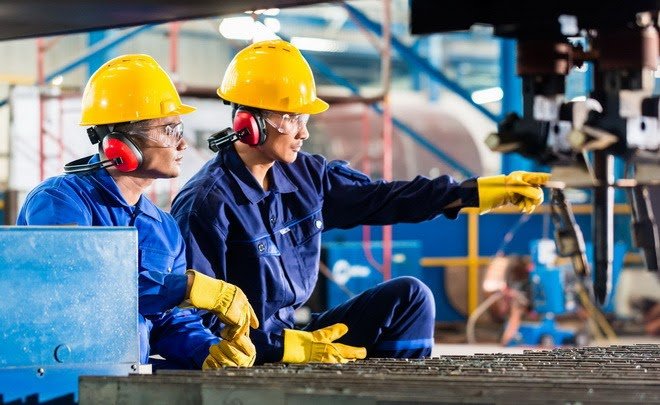
The current methods used for workplace safety protection no longer succeed in safeguarding employees. Organizations that wait for accidents to happen before addressing safety concerns usually suffer severe human losses and experience substantial financial damages. Modern occupational health practices depend on proactive risk management which enables organizations to create secure work environments through its implementation.
The shift to preventive measures needs strong systems which can detect potential threats before they develop into actual threats. Health and safety management systems work together with hazard identification processes to create safe work environments which enable employees to reach their full potential.
The Evolution of Workplace Safety Thinking
Workplace safety has evolved from simply responding to injuries after they occur. The traditional security programs primarily concentrated on accident investigation work which used a reactive problem-solving method. The existing steps hold vital value but they create a method that approaches problems from a previous time period.
Leading organizations today understand that safe work environments need organizations to develop future safety strategies. Instead of asking “what went wrong?” they ask “what could go wrong?” before anyone gets hurt. Modern occupational health philosophy establishes its core function through this preventive approach which delivers major benefits through prevention work instead of emergency response activities.
What Makes a Health and Safety Management System Effective
Organizations use health and safety management systems to create structured methods for handling workplace safety risks. The system functions as a complete guide which manages all aspects from safety policy creation to operational execution while preventing safety risks.
Effective systems share several common characteristics. First, they have clear leadership commitment and visible actions that demonstrate safety is a genuine priority. When executives allocate resources and hold people accountable for safety performance, everyone takes notice.
Second, these systems involve everyone. Workers at every level understand their role in identifying hazards, following procedures and contributing to improvement. This distributed ownership creates multiple layers of protection. Third, successful systems emphasize documentation and measurement, tracking both leading and lagging indicators to spot trends and drive informed decisions.
Understanding HIRA as Your Safety Foundation
The safety management system uses HIRA as its core component which establishes a systematic method for identifying potential worker dangers and developing protective measures against those threats. The methodology creates tangible work tasks which implement safety objectives that exist as abstract concepts. The process begins with hazard identification which studies all workplace activities including common physical hazards from machinery and chemicals and hidden dangers from ergonomic stressors and psychosocial elements and environmental conditions.
The process starts with hazard identification which studies all aspects of workplace operations including obvious physical dangers from machinery and chemicals and hidden threats which include ergonomic stressors and psychosocial factors and environmental conditions. The assessment process evaluates collected hazards through risk assessment which determines both the likelihood of occurrence and the potential impact of each hazard.
The system enables organizations to prioritize their most dangerous risks which require urgent treatment while managing their less serious risks through standard safety measures. The protective power of resources reaches its maximum effectiveness when they are distributed to their most beneficial locations.
Integrating HIRA Into Your Safety Management System
HIRA doesn’t operate in isolation it functions as the analytical engine driving your broader health and safety management system. When properly integrated, it informs policy decisions, shapes training programs, guides resource allocation and drives continuous improvement initiatives.
The organization should establish HIRA as a routine obligation which requires regular execution instead of treating it as an isolated task. The organization requires annual or semiannual assessments because workplace conditions change from year to year which guarantees your risk management system stays up to date with active operational needs.
The organization needs to acquire input from all three groups which include safety experts and management and operational staff members. The team based method identifies dangers which would escape detection through an individual examination. Thoroughly document the findings and convey them in a straightforward manner which guarantees all people comprehend both the dangers they encounter and the safety measures established to protect them.
Practical Steps for Conducting Effective HIRA
Implementing HIRA effectively requires methodical execution. Begin by defining the scope which work areas, processes or activities will you assess? For large organizations, it might make sense to tackle high risk areas first before expanding to lower risk zones.
Collect data from various information sources. The process involves walking through operational workspaces and examining incident reports and maintenance records and safety data sheets and equipment manuals and interviewing workers about their safety issues.
Use structured tools to evaluate risks consistently. Risk matrices help teams make objective assessments rather than relying on gut feelings. For each identified risk, determine appropriate controls using the hierarchy principle elimination, substitution, engineering controls, administrative controls and personal protective equipment as the last line of defense.
Common Pitfalls to Avoid in Risk Assessment
Even well intentioned HIRA efforts can fall short. One common error is conducting assessments in conference rooms rather than on the shop floor. Hazards become abstract when examined from a distance assessors need to see actual conditions and observe real workflows.
Another pitfall involves focusing exclusively on obvious physical hazards while neglecting less visible risks. Ergonomic issues and psychosocial stressors can be just as damaging as machinery accidents, yet they often receive insufficient attention.
According tohealth and safety experts, successful risk management requires ongoing commitment. Integrate hazard awareness into daily operations so it becomes second nature rather than an occasional project.
Creating Accountability and Ownership
The process of risk assessment requires someone to implement the recommendations which have been assigned to them as their main responsibility. All control measures need to have definite owners who must complete their tasks by established timeframes. Organizations need to establish safety performance targets which they will monitor throughout their regular assessment process.
Workers need avenues to raise concerns without fear. The combination of anonymous reporting systems with safety meetings and open door policies helps to identify potential hazards in a timely manner. People need to report problems because the best controls become worthless when people remain quiet about what they see.
Measuring Success and Driving Improvement
The process of effective safety management needs to include more than just injury rate assessment. The system uses leading indicators to track hazard reports and their corresponding corrective actions and training participation and safety observation frequency. The organization should conduct regular HIRA reviews to discover which trends exist in their data.
Which hazards continue to appear in multiple incidents? Which departments face difficulties when they attempt to use the new system? The current analysis discovers fundamental problems which need to be fixed through wider solutions. The organization should assess its performance against industry standards to discover potential areas which need development.
Building a Proactive Safety Culture
A combination of complete health and safety management systems with detailed HIRA processes delivers maximum worker protection. Organizations achieve safety improvements by implementing three main strategies which include ongoing hazard identification and risk assessment and implementation of safety control measures.
All successful outcomes depend on continuous work and true dedication from all staff members including those at the top and those at the bottom of the organization. Your workplace needs to implement HIRA as a dynamic process which will evolve with your organization while HIRA findings need to inform your operational choices and your organization must track its development. The final outcome will create workplaces which prioritize prevention over reaction while all employees return home safely every single day.