

Overview
Majority of the brands begin with what they are selling. Customers on the other hand begin with what they are struggling with. This discrepancy is the reason why so much content is neglected. When people wake up, they do not think about products, they think about issues, irritation and things that should be done.
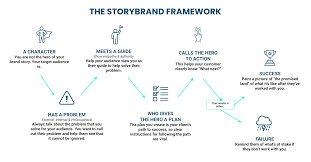
Creating a story about an issue facing your customer makes your content consistent with the reality about decision-making. Once the problem is well perceived, the solution will seem self-evident–it does not have to be forced.
Start With the Moment of Friction
All powerful stories have a point of tension. The problem is the tension in customer storytelling, as it manifests itself in real life. Not the abstract one–but the experience.
Rather than telling us that customers are experiencing issues with efficiency, demonstrate the instance: missed timeframes, duplication of work, incomprehension, or strain. These facts render the issue familiar. Whenever individuals perceive their experience appropriately, they remain.
Precise is superior to dramatics. An accurate account of a minor irritation will have more impact than an indistinct account of a major one.
Name the Problem the Way Customers Do
Customer language and internal language are hardly similar. The terms applied by the brands include optimization or workflow challenges. Customers complain, Long process, Long process, Long process, Long process or I do not know where to begin.
It is important to use the language of the customer in order to build the narrative. It signals understanding. It also saves cognitive workload- they do not need to decode your message in order to determine whether or not it applies to them.
When your audience would neither say it that way, neither write it that way.
Show the Cost of Inaction
An interesting story does not move quickly to the conclusion. It examines the outcome of the continuation of the problem. It does not have to do with fear-mongering, but rather honesty.
What is the cost of the problem in the long-run? Vitality, time, money, faith, prospects? Once these costs are properly expressed, then the problem becomes real and pressing without being blown out of proportion.
This is a move that assists in self-qualifying the customers. They make their conclusions of whether the problem is worth solving at the moment or not.
Introduce the Shift Before the Solution
Prior to launching your product or service, bring a change of mindset. This is the aha point-the point of realizing that the problem is not in vain and that it can be approached in a different way.
This change restates the problem. It transports the story of frustration to possibility. Notably, it makes your brand look like a guide and not a seller.
Once the mindset is transformed, the solution seems an extension of the mind and not a pitch.
Position the Customer as the Hero
The hero is always the customer in good stories. They are the ones having to grapple with the challenge, make decisions and undergo change. Your brand is playing the supporting part.
This framing gives the audience power. It does not commit the mistake of making the product appear impressive and leaving the customer passive. Consumers desire to be successful themselves, not to see a brand being successful.
Feeling empowered, the customers tend to take action.
Use Progress, Not Perfection, as the Outcome
Most stories tend to fail as they over promise. Impeccable results seem like fantasy and bring about mistrust. True stories are concerned with development.
What gets easier? What becomes clearer? What stress is reduced? These are gradual transformations that are plausible and realistic.
Outcomes based on progress also create trust. They establish good expectations and minimize uncertainty.
Reinforce the Narrative Consistently
A single post does not construct a story. Repetition does. It is necessary to investigate the same issue in various perspectives in the long run: emotional, practical, situational, and strategic.
Every content supports the narrative. With time, viewers start relating your brand with a realization that there is a particular issue that is associated with that issue.
This remains particularly relevant when developing a social media starter plan, as initial content will give expectations of what the brand is and what its audience is.
Let the Narrative Guide Content Decisions
Creation of contents becomes less challenging when your story is clear. You no longer ask the same question like What should we post? You are saying What is it that part of the problem we are digging into to-day?
This helps in maintaining concentration in content and avoiding random postings. It also assists teams to say no to suggestions that are not in line with the story regardless of being a trend.
Narrative brings about correspondence.
Listen and Refine Continuously
Customer problems evolve. So should your narrative. Listen to remarks, inquiries and objections. These indicators provide information about the areas that require revision in the story.
The process of narrative building is not a single event. It’s an ongoing conversation. The greater the number of times you listen, the higher the ability to reflect reality.
Final Thoughts
Creating a story about the problem of your customer is not about the dramatization of pain it is about knowing it. By telling the problem in your own words, speaking the language of the customer and steering him toward a significant change, your content will no longer seem like marketing but will rather seem like assistance. The brands that succeed in a saturated landscape are the ones that scream the least, but tell the most human stories.