

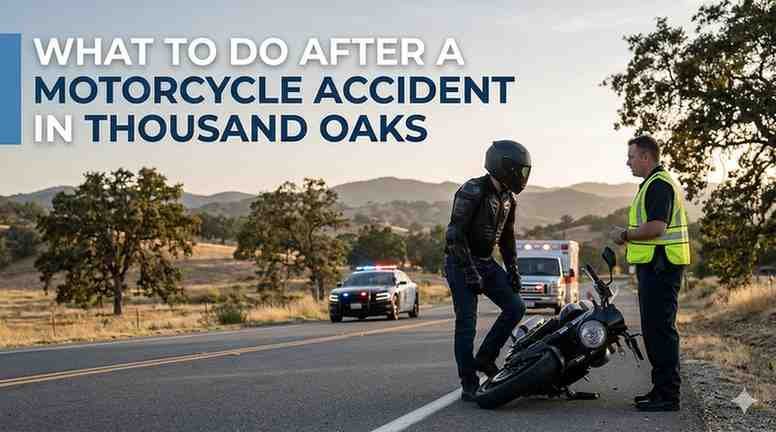
A motorcycle accident can leave you injured, shaken, and unsure what to do next. Riders have very little protection compared to people inside cars, so even a low speed crash can cause serious injuries. If you were hit by a driver in Thousand Oaks, the steps you take after the accident can affect your health, your insurance claim, and your right to compensation. A Thousand Oaks personal injury lawyer can help protect your case while you focus on recovery.
Motorcycle crashes are often treated unfairly by insurance companies. Adjusters may assume the rider was speeding, lane splitting unsafely, or taking unnecessary risks. That bias can reduce the value of a claim unless the evidence clearly shows what happened.
Call 911 and Report the Crash
After a motorcycle accident, call 911 immediately if anyone is injured or if there is property damage. In many motorcycle crashes, injuries are serious enough to require emergency medical care. Police should also come to the scene and prepare a report.
A police report may include:
• Driver and rider information
• Insurance information
• Witness names
• Crash location
• Vehicle damage
• Statements from the parties
• Citations issued
• A diagram or summary of the collision
The police report does not automatically decide who wins the case, but it can be an important starting point. If the other driver later changes their story, the report may help show what was said at the scene.
Get Medical Care Right Away
Motorcycle injuries are not always obvious immediately. Adrenaline can hide pain. A rider may think they are “just sore” and later realize they have a concussion, fracture, back injury, shoulder injury, knee injury, road rash, or internal trauma.
Common motorcycle accident injuries include:
• Broken bones
• Head injuries
• Neck and back injuries
• Spinal injuries
• Shoulder and arm injuries
• Knee and leg injuries
• Road rash
• Internal injuries
• Nerve damage
• Facial injuries
Getting medical treatment creates a record that connects your injuries to the crash. If you delay treatment, the insurance company may argue that you were not seriously injured or that something else caused your pain.
Follow the doctor’s instructions, attend follow up appointments, and keep copies of your medical records, prescriptions, imaging reports, and bills.
Take Photos and Videos at the Scene
If you are physically able, take photos and videos before anything is moved. If you cannot, ask someone you trust to help.
Important photos may include:
• Your motorcycle
• The other vehicle
• Skid marks
• Debris
• Traffic signs and signals
• Lane markings
• Road defects
• Weather and lighting conditions
• Your injuries
• Helmet and protective gear damage
In Thousand Oaks, roadway layout, visibility, traffic flow, and intersection design can all matter. Photos can help show whether the driver failed to yield, turned left in front of you, followed too closely, opened a door, drifted into your lane, or made another unsafe move.
Get Witness Information
Witnesses can be extremely important in motorcycle cases. Insurance companies often try to blame the rider. A neutral witness can help confirm that the driver was distracted, ran a red light, failed to check blind spots, or made an unsafe turn.
Get the witness’s name, phone number, email, and a short description of what they saw. Do not rely only on the police to collect every witness. Some people leave before officers arrive.
If nearby businesses, homes, or vehicles may have cameras, write down their locations. Surveillance or dashcam footage may be deleted quickly unless it is preserved.
Do Not Admit Fault
After a crash, people sometimes apologize automatically, even when they did nothing wrong. Avoid saying anything that could be interpreted as admitting fault.
Do not say:
• “I was going too fast.”
• “I should have seen you.”
• “It was my fault.”
• “I am fine.”
• “I do not need medical care.”
You can be polite without guessing about fault or minimizing your injuries. Stick to basic facts when speaking with police, medical responders, and insurance companies.
Notify Your Insurance Company Carefully
You may need to report the accident to your insurance company, but be careful with what you say. Give basic information, such as the date, location, vehicles involved, and that you are seeking medical care.
Do not give a recorded statement to the other driver’s insurance company before speaking with an attorney. Insurance adjusters may ask questions designed to make you accept partial blame or downplay your injuries.
They may ask about your speed, lane position, helmet use, prior injuries, lane splitting, or whether you “saw the car in time.” These questions can be used later to reduce the claim.
Preserve Your Motorcycle and Gear
Do not repair, sell, or destroy your motorcycle too soon. The motorcycle itself may be evidence. Damage patterns can help show impact angle, speed, braking, and how the crash occurred.
Also keep your:
• Helmet
• Jacket
• Gloves
• Boots
• Pants
• Camera footage
• Damaged backpack or personal items
Helmet and gear damage can help show the force of impact and support the seriousness of the crash. Even if the insurance company wants to inspect the motorcycle, speak with an attorney before releasing it or allowing it to be destroyed.
Watch for Common Insurance Tactics
Motorcycle accident claims are often undervalued. The insurance company may argue that you were reckless simply because you were riding a motorcycle.
Common tactics include:
• Blaming the rider
• Claiming the injuries are exaggerated
• Saying lane splitting caused the crash
• Arguing the rider was speeding
• Minimizing road rash or soft tissue injuries
• Using gaps in treatment against you
• Offering a fast, low settlement
• Asking for broad medical authorizations
A quick offer may not cover future treatment, lost income, pain and suffering, scarring, permanent limitations, or long term effects. Do not settle before understanding the full value of your case.
Track Your Losses
Keep a folder with all accident related documents. Save medical bills, receipts, pharmacy costs, repair estimates, towing records, rental costs, wage loss records, and any communication from insurance companies.
Also write down how the injuries affect your daily life. Note pain levels, sleep problems, missed work, missed activities, transportation issues, and limitations with walking, lifting, driving, exercising, or caring for family.
These details can help support a pain and suffering claim.
Speak With a Thousand Oaks Personal Injury Lawyer After a Motorcycle Accident
Motorcycle accident cases can become complicated quickly, especially when the insurance company tries to blame the rider. Evidence disappears, witnesses become harder to reach, and insurers begin building their defense immediately.
A Thousand Oaks personal injury lawyer can investigate the crash, preserve evidence, deal with the insurance companies, identify all available coverage, and fight for full compensation for medical bills, lost income, pain and suffering, property damage, and future losses.
Bojat Law Group represents injured riders across Thousand Oaks, Ventura County, Southern California, and Central California. If you were injured in a motorcycle accident, call (818) 877-4878 for a free consultation. You pay no fee unless Bojat Law Group wins your case.