

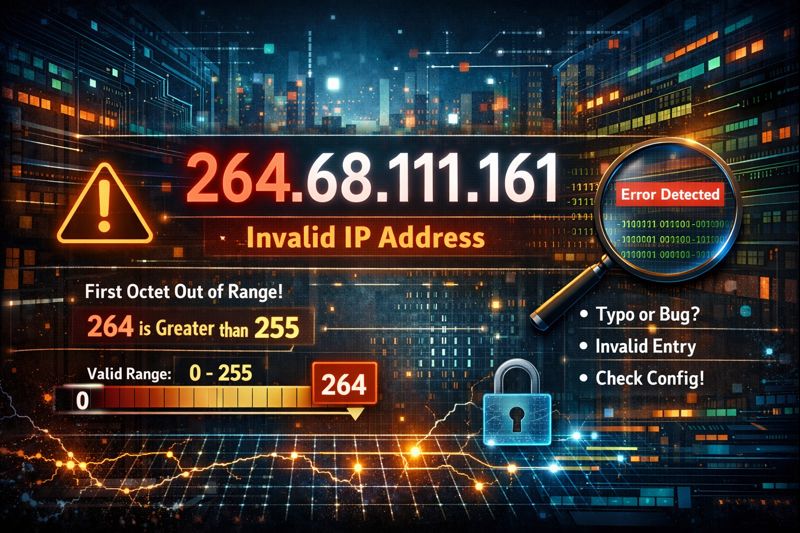
In the vast world of internet communication, IP addresses play a pivotal role in connecting devices. However, encountering unusual or invalid IP addresses can often cause confusion. One such example is 264.68.111.161. While it may seem like just another IP address, a closer look reveals a surprising truth: 264.68.111.161 is an invalid IP address. In this article, we will dive deep into the technicalities of IP addresses, explain why 264.68.111.161 is not a valid address, and explore what you can do when you come across such errors.
Understanding IP Addressing
IP addresses are unique identifiers assigned to devices connected to a network, ensuring proper communication between them. There are two main versions of IP addresses used in networking: IPv4 and IPv6. IPv4 addresses are the most common and consist of four sets of numbers, separated by periods. Each number is known as an octet and must be between 0 and 255.
A valid IPv4 address looks like this: 192.168.1.1, where each of the four octets falls within the acceptable range. When it comes to an address like 264.68.111.161, the first octet, 264, falls outside the valid range, immediately rendering it invalid.
Why “264.68.111.161” Is Invalid
The primary reason why 264.68.111.161 is invalid is that the first octet exceeds the maximum allowable value of 255. In an IPv4 address, each octet can only be a number from 0 to 255. This means that the first number, 264, is far too large to be a legitimate part of an IPv4 address. According to the rules of IP addressing, any octet exceeding 255 is considered out of bounds.
This invalid IP address might appear in logs, configurations, or network data due to typographical errors, software bugs, or invalid data inputs. While the 264.68.111.161 address may seem harmless, it highlights the importance of adhering to proper IP address formatting.
Common Errors and How to Fix Them
If you’ve encountered 264.68.111.161 in your system logs or network configurations, it’s essential to address the issue promptly. Here’s what you can do:
- Check for Typographical Errors: Ensure that the address hasn’t been typed incorrectly. Often, addresses like 264.68.111.161 are the result of a simple mistake, where an invalid number was accidentally inserted.
- Update Software or System Configurations: If this invalid IP address appears due to a software bug or outdated system, updating the software or configuration may resolve the issue.
- Use Valid IP Address Formats: Always ensure that IP addresses used in configurations fall within the acceptable range of 0–255 for each octet. If you’re unsure about the validity of an IP address, consider using an IP validation tool to check.
- Consult with Your ISP or Network Administrator: If you suspect that the issue is related to your network infrastructure, reach out to your Internet Service Provider (ISP) or network administrator for assistance in correcting the invalid address.
By identifying and fixing errors like 264.68.111.161, you can prevent potential networking issues and ensure that your system operates smoothly.
Related IP Address Concepts
While 264.68.111.161 is invalid, it’s important to understand the broader concept of valid IP addresses. A valid IPv4 address consists of four octets, each ranging from 0 to 255. Here’s an example of a valid IP: 192.168.1.1. Each octet must be within this range for the address to be valid.
Another key concept to understand is private vs. public IP addresses. Private IP addresses, like 192.168.x.x, are used within local networks, while public IP addresses are used to identify devices over the internet. However, both types must still adhere to the basic rule of having octets within the 0–255 range. As the internet continues to expand, the limited supply of IPv4 addresses has led to the adoption of IPv6, which offers a much larger pool of addresses. However, even with IPv6, proper formatting remains essential.
Practical Applications of IP Addressing
When managing a network, it’s crucial to have a proper understanding of IP addresses, as they serve multiple key functions:
- Routing Traffic: IP addresses enable devices to send and receive data across the internet or within a local network.
- Network Security: Proper IP address configurations help ensure the security of networks, including firewall settings and access controls.
- Device Identification: Each device on a network is assigned a unique IP address to facilitate proper communication and data exchange.
The appearance of an invalid address like 264.68.111.161 can cause disruptions in these processes, leading to network errors or even security vulnerabilities if not addressed.
Conclusion
In conclusion, 264.68.111.161 serves as a reminder of the importance of accurate IP addressing. While it may seem like just another address at first glance, it is ultimately an invalid one due to the first octet exceeding the acceptable range. Understanding how IP addresses work and knowing how to troubleshoot issues like this can help you maintain smooth and secure network operations.
FAQs
- What is the reason behind the invalidity of 264.68.111.161?
- The first octet, 264, exceeds the maximum allowable value of 255, making 264.68.111.161 an invalid IPv4 address.
- Can I use the address 264.68.111.161 in my network configurations?
- No, this address is invalid and cannot be used in any network configurations or device communications.
- How can I fix the error involving 264.68.111.161 in my system?
- Ensure the address is typed correctly, update any outdated configurations, or consult with a network administrator.
- What are the valid ranges for an IPv4 address?
- Each octet in an IPv4 address must fall within the range 0 to 255.
- Why do I see invalid IP addresses like 264.68.111.161 in my logs?
- Invalid addresses often appear due to software bugs, typographical errors, or incorrect data inputs.
Read More: Merrianne Jessop