

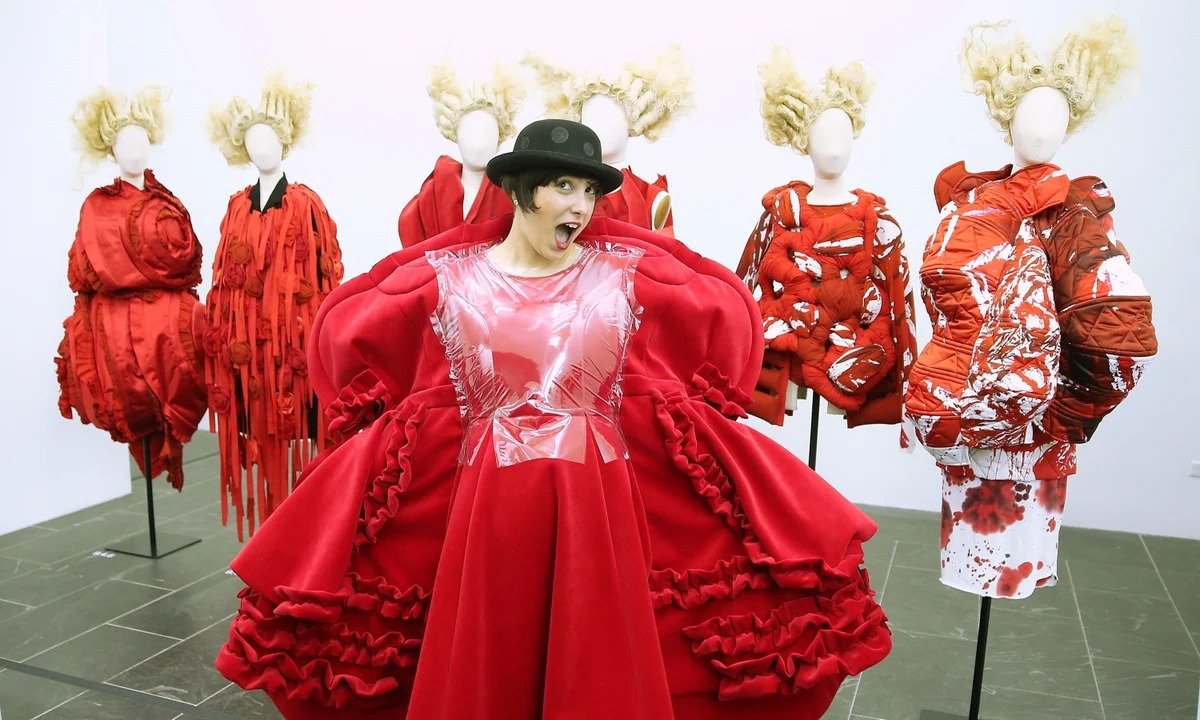
When you hear the name Comme Des Garçons, you’re not just hearing about a fashion label — you’re stepping into a world where rules are bent, silhouettes are distorted, and expectations are shattered. Founded by the visionary Japanese designer Rei Kawakubo, Comme des Garçons has never been about fitting in check at https://commedesgarcon.fr/comme-des-garcon/. It has always been about standing out — boldly, unapologetically, and often controversially.
So what makes Comme Des Garçons so powerful in the fashion world? Why has it remained influential for decades while trends rise and fall like waves on a restless ocean? Let’s dive deep into the story, philosophy, and lasting impact of this revolutionary brand.
The Birth of a Fashion Disruptor
Comme Des Garçons was founded in Tokyo in 1969 and officially established as a company in 1973. At a time when fashion was dominated by conventional glamour and predictable silhouettes, Rei Kawakubo introduced something radically different. She didn’t just design clothing — she deconstructed it.
When the brand debuted in Paris in 1981, critics were shocked. The collection featured asymmetrical cuts, oversized shapes, and a dominant black color palette. Some journalists called it “Hiroshima chic,” a term that reflected how disruptive and unfamiliar the aesthetic felt to Western audiences. But while critics were divided, the fashion-forward crowd was captivated.
It wasn’t about beauty in the traditional sense. It was about emotion, tension, and challenging the very definition of what clothing could be.
A Philosophy Beyond Fabric
If most fashion brands focus on trends, Comme Des Garçons focuses on ideas. Rei Kawakubo has famously said she likes to start from “zero.” That means ignoring what’s currently popular and instead asking: What hasn’t been done? What feels uncomfortable? What sparks curiosity?
Think of it like architecture for the body. Instead of hugging the natural shape, Comme Des Garçons often creates exaggerated forms — lumps, bumps, padding, holes — designs that provoke thought rather than simply flatter.
This approach places the brand in the realm of conceptual art as much as fashion. In fact, the influence of Rei Kawakubo was so profound that the Metropolitan Museum of Art honored her with the 2017 exhibition “Rei Kawakubo/Comme des Garçons: Art of the In-Between.” She became only the second living designer to receive a solo show there, after Yves Saint Laurent.
That’s not just recognition — that’s legacy.
The Power of Sub-Labels and Collaborations
Comme Des Garçons isn’t just one line. It’s an entire universe of sub-labels, each with its own identity. There’s Comme Des Garçons Homme, Comme Des Garçons Noir check at https://commedesgarconn.fr/, and perhaps the most recognizable to mainstream audiences, CDG Play.
The heart-with-eyes logo from CDG Play — designed by Polish artist Filip Pagowski — has become an iconic symbol in streetwear culture. You’ve probably seen it on T-shirts, hoodies, and sneakers. It’s playful, simple, and instantly recognizable.
And then there are the collaborations. Comme Des Garçons has partnered with brands like Nike, Converse, and Supreme. These collaborations bridge the gap between avant-garde fashion and everyday street style, making the brand accessible to new audiences without sacrificing its identity.
It’s like watching high art shake hands with urban culture — unexpected, but powerful.
The Influence on Modern Streetwear
Here’s the thing: Comme Des Garçons didn’t just influence high fashion — it reshaped streetwear too.
Before luxury and street culture blended seamlessly, CDG was already experimenting with the crossover. The brand’s ability to move between conceptual runway pieces and graphic-heavy casual wear inspired countless designers and labels.
Today, many streetwear brands embrace oversized silhouettes, minimal color palettes, and logo-driven designs — elements that Comme Des Garçons helped normalize decades ago. Even high-fashion houses now collaborate with sneaker brands regularly. Back in the day, that idea would’ve sounded absurd.
Rei Kawakubo didn’t follow the wave. She created it.
Retail Spaces as Artistic Experiences
Walk into a Comme Des Garçons store, and you’ll quickly realize it’s not just a shopping trip — it’s an experience. The brand’s retail concept often feels like stepping into an art installation.
One of its most famous retail concepts is Dover Street Market, a multi-brand retail space founded by Rei Kawakubo and her husband Adrian Joffe. Locations in cities like London, New York, and Tokyo feature constantly evolving interiors and curated selections of both emerging and established designers.
These spaces blur the line between gallery and boutique. They’re unpredictable, creative, and immersive — much like the clothing itself.
Why Comme Des Garçons Still Matters
In a world where fast fashion dominates and trends cycle at lightning speed, Comme Des Garçons remains steadfastly independent like https://hell-star.ca/. It doesn’t chase viral moments. It doesn’t design for algorithms. It designs for expression.
That authenticity is rare.
The brand challenges the idea that clothing must always be flattering or commercially safe. Instead, it invites you to rethink your relationship with fashion. What if clothing could make you question beauty standards? What if it could spark conversation? What if it could feel like wearable philosophy?
Comme Des Garçons dares to ask those questions — and then answers them in fabric.
The Legacy of Rei Kawakubo
Rei Kawakubo herself remains an enigmatic figure. She rarely gives interviews and avoids the spotlight. Yet her influence is undeniable. Designers across the globe cite her as inspiration. Entire fashion movements owe a debt to her fearless experimentation.
She proved that a brand doesn’t need to conform to Western ideals to succeed globally. She showed that imperfection can be powerful. And most importantly, she demonstrated that fashion can be intellectual, emotional, and rebellious all at once.
In many ways, Comme Des Garçons is less about clothing and more about courage — the courage to be different.
Conclusion: More Than a Brand, A Mindset
Comme Des Garçons is not for everyone — and that’s exactly the point. It’s a brand built on challenging norms, redefining beauty, and embracing the unconventional. From its disruptive Paris debut to its iconic collaborations and museum recognition, it has consistently rewritten the rules of fashion.
While trends fade and competitors chase relevance, Comme Des Garçons continues to stand firmly in its own lane. It doesn’t whisper for attention. It commands it — quietly, confidently, and creatively.